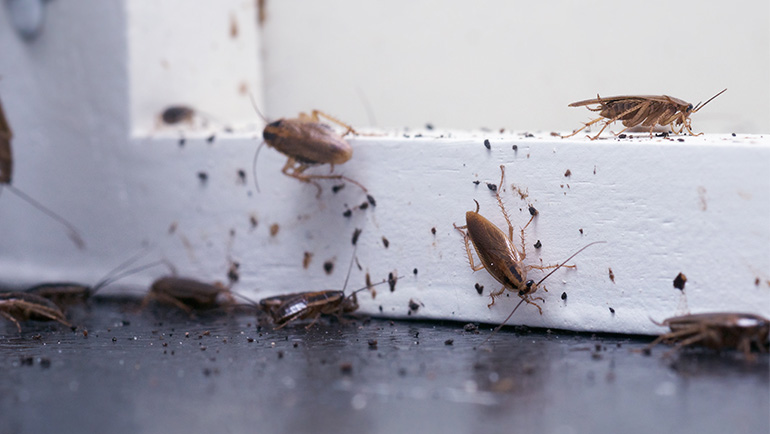
Droppings and spotting
Fine dark specks, smears, or larger cylindrical droppings may appear inside cabinets, behind appliances, around hinges, along wall edges, or near active harborages.

Cockroach inspection, control, and prevention
Cockroaches can remain hidden behind appliances, inside cabinets, around plumbing, beneath stored materials, and within cracks near dependable food, water, and warmth. Bee Smart Pest Control identifies the likely species, maps active harborages and travel routes, and recommends a property-specific plan for homes and businesses across Colorado’s North Metro and selected Boulder County communities.
Direct answer
Effective cockroach control combines correct species identification, monitoring, removal of food and water, reduction of hiding places, exclusion, and targeted treatment placed where cockroaches travel and shelter. Repeated surface spraying alone rarely reaches the full population, and foggers can create unnecessary exposure without addressing concealed harborages.
Tell Bee Smart where you are finding cockroachesInteractive activity-location scan
Select the location that best matches what you are seeing. Different areas point to different moisture sources, food access, species, travel routes, and treatment placements.
Use the buttons below or the arrow keys to move through the locations.
Warning signs
Cockroaches are primarily nocturnal and spend much of their time hidden. Monitoring behind appliances, inside cabinets, near plumbing, and along wall edges can reveal activity that casual inspection misses.
Fine dark specks, smears, or larger cylindrical droppings may appear inside cabinets, behind appliances, around hinges, along wall edges, or near active harborages.
Egg cases, immature cockroaches, and cast skins indicate more than a single wandering adult. Their size and placement can also help with species identification.
Repeated nighttime sightings, daytime activity, or a persistent musty odor in a concentrated area may indicate a larger or more established population.
Found an egg case or several small nymphs? Keep the area undisturbed enough for the technician to inspect the pattern.
Call Bee SmartIdentification matters
Cockroaches that reproduce indoors do not behave the same way as larger moisture-associated species or outdoor wood roaches that wander inside. Size, markings, location, and life stage all matter.
German cockroaches are small and light brown with two dark stripes behind the head. They commonly establish around kitchens, appliances, bathrooms, food service, and other warm areas with dependable food and moisture.
Oriental cockroaches are larger and dark brown to nearly black. They are often associated with cool damp areas, drains, basements, crawlspaces, foundations, exterior organic matter, and utility routes.
American cockroaches are large and favor warm humid utility areas. Brown-banded cockroaches are smaller and may occupy warm, drier, elevated locations such as furniture, cabinets, and electronics.
Colorado Extension identifies German, brown-banded, American, and Oriental cockroaches among the problem species found in the state. Review its Colorado cockroach identification overview.
Why cockroach control matters
Cockroaches move through food, waste, drains, cracks, and other unsanitary areas. Their bodies and droppings can contaminate food and preparation surfaces, while feces, shed skins, and body fragments can contribute to indoor allergens.
People who are sensitized to cockroach allergens may experience worsened asthma or allergy symptoms. Prompt control, careful cleanup, sanitation, and reduction of hidden harborages are especially important in kitchens, multifamily properties, childcare settings, and food-adjacent businesses.
What to expect
The recommendation depends on the species, population level, active rooms, sanitation, moisture, building layout, neighboring units, inventory, occupants, and previous products used.
Bee Smart evaluates specimens, photos, droppings, egg cases, locations, and behavior to narrow the likely species.
Monitoring helps reveal where cockroaches travel, shelter, feed, and access water instead of treating every room the same way.
The plan may use baits, monitors, growth regulators, crack-and- crevice treatment, sanitation, exclusion, or other appropriate tools.
Follow-up monitoring measures progress, identifies remaining pockets, and guides adjustments to treatment and prevention.
Roaches returning after store-bought spray?
Tell Bee Smart which rooms are active, where the smallest cockroaches appear, and what sprays, baits, foggers, or powders have already been used.
DIY or professional service?
Total-release foggers may create fire, explosion, and exposure hazards when used incorrectly. They also depend on exposed insects contacting the pesticide and may not reach cockroaches hidden deep inside cracks, cabinets, appliances, and wall voids.
Professional service becomes more useful when the species is uncertain, the population is reproducing indoors, activity spans several rooms or units, or previous products have dispersed the cockroaches without eliminating the harborage.
Homes and businesses
A small residential kitchen requires a different monitoring and treatment plan from multifamily housing, a restaurant, a warehouse, a break room, or a facility receiving frequent deliveries.
Home service may focus on kitchens, bathrooms, basements, laundry rooms, appliances, cabinets, attached garages, drains, storage, and items recently brought into the home.
Business service considers food handling, inventory, sanitation, receiving, waste, shared utility routes, operating hours, documentation, tenant coordination, and follow-up needs.
Local service area
Bee Smart serves homes and businesses across the North Metro, northern Front Range, and selected communities north and northwest of Denver.
Related services
Food, moisture, clutter, plumbing, deliveries, and structural gaps can support multiple pests at once. Correct identification keeps the service focused.
Cockroach control FAQs
Common signs include live adults or nymphs, droppings, dark spotting, egg cases, shed skins, a persistent odor, and repeated activity around food, water, appliances, cabinets, drains, or storage.
Daytime activity can occur when a harborage is disturbed, food or water is limited, or the population is large enough that some cockroaches are pushed into exposed areas. One sighting alone does not determine the infestation level.
German cockroaches are small, light brown, and commonly reproduce indoors around kitchens and bathrooms. Oriental cockroaches are larger, darker, and more strongly associated with cool damp areas, drains, basements, crawlspaces, and exterior routes.
No. Cockroaches can enter clean properties through deliveries, used items, shared utility routes, drains, doors, and structural gaps. Sanitation affects how well a population can survive, but introduction and building conditions also matter.
Baits are often useful because cockroaches feed on them and carry the effect into hidden harborages. The right product and placement depend on the species, competing food, previous sprays, occupants, and active locations.
Foggers do not reliably reach cockroaches hidden deep inside cracks, cabinets, appliances, and wall voids. They can also create exposure, fire, and explosion hazards when used incorrectly.
Timing depends on the species, population size, building layout, sanitation, moisture, neighboring units, previous products, and access to harborages. Established German-cockroach infestations commonly require follow-up rather than one surface treatment.
Yes. Cockroach feces, shed skins, and body fragments can act as indoor allergens and may worsen asthma or allergy symptoms in sensitized people.
Yes. Bee Smart serves residential and commercial properties. The recommendation reflects food handling, sanitation, inventory, deliveries, shared routes, operating hours, documentation, and follow-up needs.
Contact Bee Smart online or call 720-937-0527. Share where the activity appears, whether you are seeing adults or small nymphs, and what sprays, baits, foggers, or powders have already been used.
Ready for a targeted cockroach plan?
Request an inspection-based recommendation for your North Denver, northern Front Range, or Boulder County home or business.