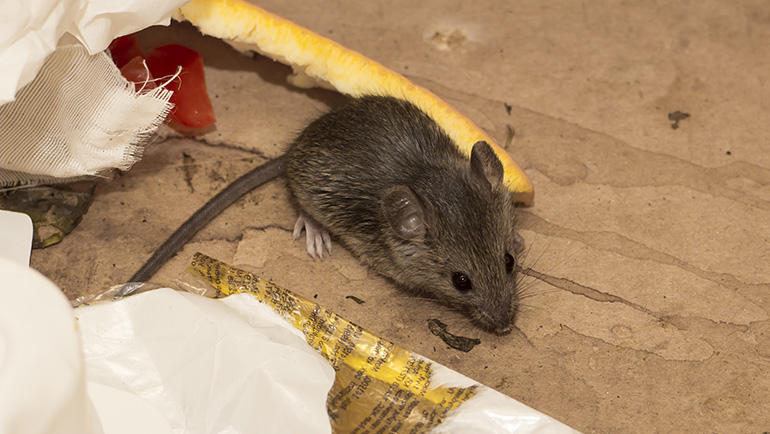
Droppings or urine staining
Droppings in cabinets, drawers, garages, storage rooms, attics, or along wall edges can indicate rodent travel. New evidence after proper cleanup suggests current activity.

Mouse inspection, control, and prevention
Scratching in a wall, droppings in a cabinet, gnawed food packaging, or nesting material in a garage can point to active mouse pressure. Bee Smart Pest Control inspects the evidence, identifies likely travel routes and entry points, and recommends a property-specific plan for homes and businesses across Colorado’s North Metro and selected Boulder County communities.
Direct answer
Preserve the evidence, remove easy food access, keep pets and children away from traps or contaminated areas, and schedule an inspection before sealing every opening. A successful plan typically combines population control, monitoring, sanitation, and exclusion so the mice inside are addressed without leaving the building open to new activity.
Tell Bee Smart what you are hearing or findingInteractive activity-location scan
Select the location that best matches what you are seeing. Each area points to different food sources, nesting sites, travel paths, and openings that need to be inspected.
Use the buttons below or the arrow keys to move through the locations.
Warning signs
A single sighting can matter, but the most useful clues are the patterns left behind along walls, behind stored items, and near food, warmth, nesting materials, and small openings.
Droppings in cabinets, drawers, garages, storage rooms, attics, or along wall edges can indicate rodent travel. New evidence after proper cleanup suggests current activity.
Chewed food packaging, insulation, cardboard, wood, plastic, or other materials may reveal feeding, access, or nesting behavior.
Nighttime wall or ceiling noise, shredded paper or insulation, and persistent odors can help narrow the active area even when the mice stay hidden.
Hearing activity at night? Note the room, wall, ceiling, and time instead of opening the cavity.
Call Bee SmartIdentification matters
Dropping size, travel paths, gnawing, nesting location, tracks, and access points help distinguish house-mouse pressure from rats, voles, squirrels, or other animals.
House mice are small, adaptable rodents that use wall edges, cabinets, garages, attics, storage, and utility routes. They can establish close to dependable food and shelter.
Larger droppings, heavier gnawing, burrows, stronger grease marks, and larger access points may indicate rats. Trap size, placement, monitoring, and treatment planning need to match the rodent.
Yard tunneling, plant damage, daytime attic noise, or larger openings may point to another animal. Correct identification avoids applying a house-mouse plan to the wrong problem.
The CDC recommends inspecting for droppings, gnaw marks, nesting material, and other evidence, then combining safe cleanup, trapping, and exclusion. Review its wild rodent control guidance.
Colorado mouse pressure
Mice look for dependable shelter, food, and nesting material. Garages, crawlspaces, attics, basements, sheds, utility chases, and storage areas can provide protected routes when exterior conditions become less favorable.
North Metro properties may have pressure around attached garages, foundation joints, roof returns, utility penetrations, window wells, exterior storage, bird seed, pet food, and landscaped edges.
What to expect
The plan depends on the evidence, active rooms, building layout, access points, food and nesting resources, children or pets, and whether the property is residential or commercial.
Share where droppings, gnawing, sounds, odors, nesting materials, or sightings occur.
The technician checks travel paths, food access, harborage, structural gaps, utility lines, storage, and exterior pressure.
Bee Smart explains appropriate monitoring, trapping, baiting, sanitation, exclusion, and follow-up based on the property.
Continued monitoring confirms whether activity is declining and helps identify remaining openings or resources.
New droppings or scratching sounds?
Tell Bee Smart where you found the evidence, whether the activity is recent, and which areas contain food, storage, pets, or regular customer traffic.
Cleanup and DIY safety
The CDC advises against sweeping or vacuuming dry droppings, urine, or nesting materials. Its current guidance calls for ventilation where appropriate, gloves, thorough wetting with disinfectant, and careful disposal.
Heavy contamination, inaccessible nesting, persistent activity, or uncertainty about cleanup may justify professional help. Pest control and contamination cleanup are related but separate needs, and the appropriate scope depends on the condition of the property.
Homes and businesses
A mouse in a residential garage is different from recurring activity in food storage, multifamily housing, a warehouse, an office break room, or a customer-facing business.
Home service may focus on kitchens, pantries, garages, attics, basements, crawlspaces, laundry rooms, storage areas, attached structures, and exterior openings.
Business service considers operating hours, food and inventory, employee and customer areas, loading zones, waste handling, maintenance access, documentation, and follow-up needs.
Local service area
Bee Smart serves homes and businesses across the North Metro, northern Front Range, and selected communities north and northwest of Denver.
Related services
Correct identification matters when the evidence involves larger droppings, burrows, yard damage, insects around contaminated areas, or secondary pest activity.
Mice control FAQs
Common signs include droppings, gnawed packaging or materials, shredded nesting material, scratching sounds, tracks, odors, and repeat sightings along walls or near food and storage.
Mice enter buildings for shelter, warmth, food, water, and nesting material. Gaps around doors, foundations, siding, utilities, vents, garages, roofs, and attached structures can provide access.
Exclusion is essential, but the timing needs to account for rodents already inside. An inspection can help determine which openings are active and how sealing fits with trapping, monitoring, and follow-up.
The CDC advises against sweeping or vacuuming dry rodent urine, droppings, or nesting materials because that can stir contaminated particles into the air. Follow current CDC wet-cleanup guidance.
Repellent devices do not replace inspection, population control, sanitation, monitoring, and exclusion. Persistent evidence means the travel route and source conditions still need to be addressed.
Traps may reduce mice already inside, but lasting control also depends on locating entry points, removing food and nesting resources, monitoring for new evidence, and correcting exterior pressure.
Rats are generally larger and leave larger droppings, tracks, gnawing, and openings. Behavior and trap response also differ, so correct identification is important before choosing a control plan.
Yes. Bee Smart serves residential and commercial properties. The recommendation reflects the building, inventory, food access, occupants, operating schedule, evidence, and entry routes.
Store food and seed in sealed containers, remove clutter, manage trash, clean spills, repair door seals, inspect utility openings, trim vegetation away from the structure, and close confirmed entry points with durable materials.
Contact Bee Smart online or call 720-937-0527. Share where you found droppings, damage, sounds, or sightings and whether the property is residential or commercial.
Ready to stop the mouse activity?
Request an inspection-based recommendation for your North Denver, northern Front Range, or Boulder County home or business.