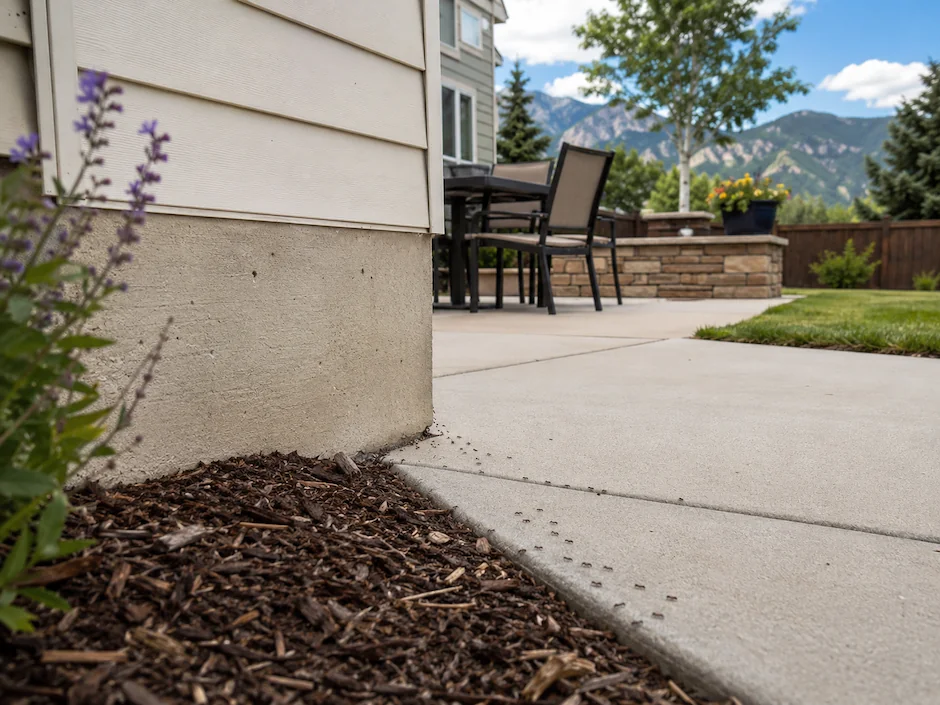
Ant trail moving between mulch, a patio, and the foundation of a home

Residential and Commercial Ant Control

Ant Control Services for Homes and Businesses

Ants disappearing after you spray and returning a few days later usually means the source is still active. Bee Smart Pest Control inspects the trail, likely nesting areas, entry points, food sources, moisture, and exterior conditions before recommending the next step.

Residential and Commercial Inspection-Based Service Locally Owned Free Estimates

Direct Answer

When do you need professional ant control?

Professional ant control is a good next step when ants keep returning, emerge from walls or trim, appear in multiple rooms, or remain active after food and moisture sources are cleaned up. An inspection helps determine whether the ants are outdoor foragers, nesting within the structure, or repeatedly entering through the same route.

Still seeing ants? Request an inspection.

Why Ants Keep Returning

Spraying the visible trail may not reach the colony

Ants usually enter a property because they have found food, moisture, shelter, or a reliable route inside. Workers may travel from colonies beneath pavement, around landscaping, near a foundation, or within part of the structure.

Surface treatment may kill the workers crossing the visible area. It may not reach the nest, remove the attractant, correct a moisture condition, or close the route the colony is using.

The next trail may follow the same path or appear somewhere else. That is why recurring activity needs more than another quick spray.

Common indoor attractants

  • Crumbs, grease, sweets, and spilled drinks
  • Pet food and water bowls
  • Trash, recycling, and food residue
  • Leaking pipes and damp cabinet areas
  • Moisture around appliances and plumbing

Common exterior pressure points

  • Mulch and irrigated landscaping
  • Patio and sidewalk seams
  • Foundation cracks
  • Garage and exterior door gaps
  • Utility, cable, and plumbing openings

Ant Identification

Why identifying the ant changes the treatment plan

Ant species differ in size, nesting behavior, food preference, and response to treatment. A small ant beneath a patio may require a different approach than large ants traveling from damaged wood or tiny ants nesting throughout a building.

Several ants traveling across a branch near a nesting area

Details worth documenting

  • Approximate size and color
  • Where the trail begins and ends
  • Time of day activity is strongest
  • Whether ants prefer sweets, grease, or pet food
  • Whether winged ants are present
  • Whether activity is near damp or damaged wood

A clear photo or preserved sample can help narrow down the ant type. Avoid assuming every small ant or large black ant requires the same treatment.

Common Ant Concerns

Ants that may be found around Colorado properties

Several ant species may forage around or enter homes and businesses. Identification helps determine whether the ants are likely nesting outdoors, beneath pavement, in soil, inside wood, or elsewhere in the structure.

Pavement Ants

Small, dark ants commonly associated with concrete, sidewalks, patios, rocks, and foundation edges. They may produce small piles of soil near nest openings.

  • Often nest beneath pavement or rocks
  • May trail along foundations and slab edges
  • Can enter kitchens and food-storage areas

Field Ants

Medium-sized black or reddish-brown ants that generally nest outdoors. They may enter structures seasonally while searching for food.

  • Common around yards and gardens
  • Can be mistaken for carpenter ants
  • Usually associated with outdoor colonies

Carpenter Ants

Large black or brown ants that create nesting galleries in wood. Structural nests are often associated with wood affected by leaks, decay, or previous moisture damage.

  • Large workers or winged ants indoors
  • Possible sawdust-like debris near wood
  • Possible activity around damp materials

Odorous House Ants

Small dark ants that may enter while foraging for sweets and other foods. Heavy mulch against a foundation can contribute to activity.

  • Small dark workers
  • Often follow defined trails
  • May enter through very small exterior gaps

Cornfield Ants

Small light-to-medium brown ants that usually nest outdoors but may enter buildings while searching for sweet materials.

  • Usually associated with outdoor nests
  • May enter buildings seasonally
  • Often attracted to sweet food sources

Indoor-Nesting Ants

Some ants can establish colonies within buildings and move through wall voids, cabinets, utility routes, and connected units.

  • Activity across several rooms or units
  • Trails emerging from walls or fixtures
  • Persistent indoor activity throughout the year

Not sure what kind of ant you found? Save a clear photo and tell Bee Smart where the activity is occurring.

Ask Bee Smart

Signs worth investigating

  • Large black or brown ants appearing indoors
  • Winged ants collecting near windows
  • Coarse sawdust-like material below wood
  • Faint rustling sounds inside a wall
  • Activity near leaks or damaged wood
  • Ants remaining active indoors year-round

Larger Ants Indoors

Carpenter ant concerns require a closer inspection

Carpenter ants are different from termites. They do not consume wood as food, but they can remove material to create nesting galleries.

Finding one large ant does not automatically prove that a nest is inside the structure. Some carpenter ants found indoors are foragers returning to an outdoor colony.

Repeated indoor activity, winged ants emerging inside, coarse debris, faint sounds within a wall, or activity near water-damaged wood provides more reason to investigate.

Do not tear open walls based only on one sighting. Document the location and begin with an inspection.

Homes and Businesses

Ant control based on where the activity is happening

Ant pressure inside a kitchen is different from activity around an office, warehouse, rental property, break room, or exterior foundation. The inspection needs to reflect the property.

Residential Ant Control

Bee Smart helps homeowners trace ant activity around kitchens, bathrooms, laundry areas, basements, garages, patios, landscaping, and foundation edges.

  • Ant trails across counters and floors
  • Ants around sinks and dishwashers
  • Activity near pet food or pantry storage
  • Ants entering near doors and windows
  • Possible carpenter ant evidence

Commercial Ant Control

Ant sightings can quickly affect customer confidence and sanitation concerns when they appear around food, employees, tenants, products, or public areas.

  • Offices and retail properties
  • Break rooms and employee kitchens
  • Property management locations
  • Warehouses and storage rooms
  • Trash and exterior receiving areas

Inspection First

What Bee Smart looks for during an ant inspection

Good ant control starts by understanding the trail, likely nesting area, entry route, and conditions allowing activity to continue.

1

Trail patterns

Where workers appear, where they travel, and whether activity changes throughout the day.

2

Entry routes

Doors, windows, foundation gaps, utility openings, plumbing routes, and garage edges.

3

Food and moisture

Crumbs, grease, pantry products, pet food, trash, plumbing leaks, and damp materials.

4

Exterior pressure

Mulch, lawns, trees, patios, sidewalks, foundations, and outdoor nesting areas.

Property-Specific Treatment

The treatment needs to match the ant and nesting location

There is no single application that makes sense for every ant problem. Treatment may differ depending on whether the colony is outdoors, beneath pavement, inside damaged wood, or within part of the structure.

Depending on the inspection, recommendations may include targeted treatment, bait placement, crack-and-void treatment, exterior treatment, monitoring, moisture correction, entry-point work, or follow-up service.

Bee Smart explains the recommended approach before treatment begins. Product selection and preparation instructions depend on the ant, affected area, and property conditions.

  • Identify the ant before selecting treatment
  • Trace active trails and likely entry routes
  • Evaluate food and moisture conditions
  • Target nesting or harborage areas when found
  • Monitor activity after treatment
  • Combine treatment with practical prevention

What to Expect

What happens when you schedule ant control

Bee Smart focuses on finding why ants are active and matching the service plan to the ant, trail, affected area, and property.

1

Describe the activity

Share where ants are appearing, how often they return, and what you have already tried.

2

Inspect the property

The technician evaluates trails, entry routes, food, moisture, nesting conditions, and exterior pressure.

3

Review the findings

Bee Smart explains what was found and which treatment approach fits the activity and property.

4

Treat and monitor

Treatment, monitoring, prevention, and follow-up depend on the ant type and likely colony location.

DIY steps may help when

  • The trail is small and limited to one area
  • You can identify and remove the attractant
  • Activity stops after cleaning and exclusion
  • There is no evidence of an indoor nest

Call Bee Smart when

  • Ants return after cleaning or spraying
  • Trails appear in more than one room
  • Large or winged ants appear indoors
  • Ants are active near damp wood
  • The problem affects customers or employees

DIY or Professional Service?

Why store-bought ant spray may not solve the source

Contact spray may kill workers crossing a countertop or floor. The colony can remain active outside, beneath pavement, inside a wall, or near another part of the structure.

Baits can help with some ant species, but food preference varies. Placement, freshness, competing food, moisture, and ant type all affect whether ants accept and carry bait.

Professional inspection becomes more useful when activity persists or the ant cannot be confidently identified.

Get Help Today

Are ants still returning after you cleaned or sprayed?

The colony, entry route, or condition attracting the ants may still be active. Bee Smart can inspect the trail and recommend the right next step for your home or business.

Preparation and Prevention

Steps that can reduce ant pressure around your property

Food, moisture, vegetation, and open entry routes can continue supporting ant activity before and after treatment.

Inside the property

  • Clean food residue around appliances
  • Store pantry products in sealed containers
  • Secure pet food when it is not being used
  • Empty trash and rinse recycling regularly
  • Correct plumbing leaks and damp cabinet areas
  • Seal obvious gaps around pipes and utilities

Outside the property

  • Trim shrubs and branches away from the structure
  • Avoid piling mulch against the foundation
  • Correct irrigation that keeps foundation edges wet
  • Seal gaps around doors and utility openings
  • Store firewood away from the building
  • Replace damaged or decayed wood when necessary

Keep part of an active trail visible before the inspection when practical. Its direction can help the technician locate an entry route or likely nesting area.

View Pest Control Programs

Featured Service Areas

Ant control across Bee Smart’s service area

Bee Smart serves homes and businesses across the North Metro, Boulder County, and nearby Front Range communities. Select a featured location for local service information.

Bee Smart also serves Boulder, Longmont, Brighton, Firestone, Frederick, Dacono, Lochbuie, Superior, and other nearby communities. Contact the team to confirm service for your address.

Related Pest Services

Landscaping, moisture, foundations, garages, and exterior openings can support more than one type of pest activity.

Frequently Asked Questions

Ant Control Questions

Clear answers for homeowners and businesses dealing with recurring ant activity.

Why do ants keep coming back?

Ants often return because the colony, entry point, food source, moisture condition, or outdoor nesting area remains active. Killing visible workers does not always reach the source.

What attracts ants inside a house?

Ants may enter for crumbs, grease, sweets, pet food, trash, recycling, water, plumbing leaks, and shelter. Small gaps around doors, windows, foundations, pipes, and utilities can provide entry routes.

What kinds of ants are found around Colorado homes?

Pavement ants, field ants, carpenter ants, cornfield ants, odorous house ants, and several other ants may be found in or around Colorado homes. Correct identification helps determine where they are likely nesting and which treatment may be appropriate.

Are ants dangerous?

Many ants are primarily nuisance pests, but some may contaminate food, bite, sting, or indicate moisture-damaged wood. The concern depends on the ant and where activity is occurring.

Are carpenter ants the same as termites?

No. Carpenter ants and termites are different insects. Carpenter ants excavate wood to create nesting galleries but do not consume wood in the same way termites do.

Does seeing a carpenter ant mean my home has structural damage?

Not necessarily. Some carpenter ants found indoors are workers traveling from an outdoor colony. Repeated indoor activity, winged ants emerging inside, wood debris, or activity near damaged wood warrants closer inspection.

Can Bee Smart treat ants inside my home?

Yes. Interior treatment may be recommended when ants are actively trailing indoors or emerging near kitchens, bathrooms, plumbing, walls, or food areas. The approach depends on the inspection.

Does Bee Smart provide commercial ant control?

Yes. Bee Smart works with businesses dealing with ant activity near food, trash, break rooms, restrooms, storage, employee areas, tenant spaces, and customer-facing areas.

Should I clean up the ant trail before service?

Clean food spills and sanitation problems, but leave some evidence of the active trail when practical. The direction of travel can help the technician locate the entry route or likely nesting area.

How much does ant control cost?

Cost depends on the property size, ant type, nesting location, activity level, treatment requirements, and whether follow-up or recurring prevention is recommended. Bee Smart provides free estimates.

How do I schedule ant control?

Contact Bee Smart Pest Control online or call 720-937-0527. Describe where the ants are appearing, how long the activity has continued, and whether the property is residential or commercial.

Bee Smart Pest Control

Get help before the ant trail becomes a recurring problem

Tell Bee Smart where the ants are appearing and what you have already tried. The team can inspect the activity, explain the likely source, and recommend the right next step for your home or business.