Repeated indoor sightings
Earwigs showing up near the same door, window, bathroom, basement, or utility area may indicate a consistent entry route or exterior moisture source nearby.

Earwig inspection, prevention, and treatment
Earwigs usually develop outdoors in cool, shaded, moisture-retaining areas and then move through gaps around doors, windows, foundations, vents, and utility openings. Bee Smart Pest Control identifies where the activity is coming from, evaluates moisture and harborage around the property, and recommends a practical plan for homes and businesses across Colorado’s North Metro and selected Boulder County communities.
Direct answer
The strongest plan combines moisture correction, removal of daytime hiding places, sealing likely entry points, monitoring, and targeted exterior treatment when the activity warrants it. Spraying individual earwigs indoors may remove what you can see, but it does not correct the outdoor conditions or openings that allowed them inside.
Tell Bee Smart where you are finding earwigsInteractive activity-location scan
Select the location that best matches what you are seeing. The location helps narrow the likely entry route, moisture source, or outdoor harborage that needs to be inspected.
Use the buttons below or the arrow keys to move through the locations.
What the sightings mean
Earwigs are outdoor insects. The pattern, timing, and location of the sightings help distinguish a temporary invader from a larger exterior population pressing against the building.
Earwigs showing up near the same door, window, bathroom, basement, or utility area may indicate a consistent entry route or exterior moisture source nearby.
Clusters beneath pots, boards, mulch, stones, landscape fabric, stored materials, or dense vegetation point to sheltered daytime harborage.
Ragged holes in flowers, seedlings, leaves, corn silks, or soft fruit may justify nighttime inspection to confirm whether earwigs are responsible.
Seeing earwigs after irrigation or rain? Note which areas remain damp longest and where the insects enter.
Call Bee SmartIdentification matters
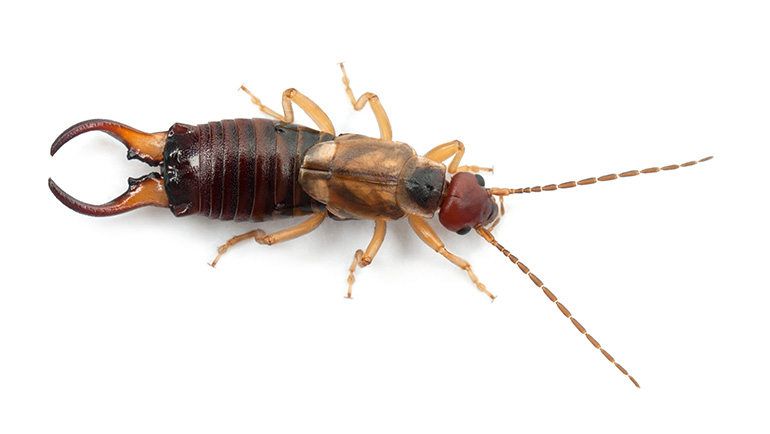
The forceps at the end of the abdomen make earwigs easy to recognize. They are primarily nocturnal, hide during the day, and can be both nuisance pests and opportunistic predators of other small insects.
Adult earwigs have a long, flattened body and a visible pair of forceps at the rear. These structures look threatening, but earwigs are not considered a meaningful danger to people.
During the day, earwigs commonly shelter beneath mulch, debris, pots, boards, stones, dense vegetation, and other protected areas. They become more active after dark.
Earwigs may damage seedlings, flowers, soft fruit, and other tender plant tissue, but they also feed on aphids, mites, insect eggs, and decaying material.
Colorado State University recommends combining exclusion, trapping, habitat changes, and targeted exterior treatment where needed. Review its European earwig guidance for Colorado properties.
Colorado earwig pressure
Colorado’s dry climate does not eliminate earwig problems. Irrigated lawns, mulched beds, shaded foundation edges, dense ground cover, window wells, and areas beneath outdoor objects can hold the cool, damp conditions earwigs seek during the day.
Activity may become more noticeable after watering, rain, landscape changes, or weather shifts that push insects toward garages, basements, bathrooms, and other protected spaces.
What to expect
The recommendation depends on where the activity occurs, the exterior habitat, moisture, entry points, plant damage, property use, and whether earwigs are appearing occasionally or repeatedly.
Share where earwigs appear, when the activity increases, and whether you are also seeing garden damage.
The technician evaluates entry points, moisture, mulch, drainage, irrigation, debris, foundation edges, and nearby shelter.
Bee Smart explains whether the property calls for habitat changes, exclusion, monitoring, targeted treatment, or a combination.
The team reviews practical changes that can make the foundation and nearby landscape less favorable to recurring earwig activity.
Earwigs showing up repeatedly indoors?
Tell Bee Smart where you are finding earwigs, whether the sightings follow watering or rain, and which exterior areas stay damp or shaded.
DIY or professional service?
Earwigs generally do not establish reproducing indoor populations. When they keep appearing inside, the more useful question is how they are entering and which exterior conditions are supporting the activity.
Professional service becomes more useful when sightings persist, activity is widespread, the source is difficult to locate, or the property needs a coordinated plan for moisture, harborage, exclusion, and targeted treatment.
Homes and businesses
A few earwigs near a residential basement door call for a different response than recurring activity around irrigated landscaping, commercial entrances, storage areas, or shared exterior spaces.
Home service may focus on foundation edges, basements, window wells, garages, patios, mulch beds, gardens, bathrooms, laundry areas, and other locations where outdoor activity reaches the interior.
Business service considers employee and customer exposure, landscaping, irrigation, loading areas, storage, lower-level spaces, shared entrances, maintenance schedules, and documentation needs.
Local service area
Bee Smart serves homes and businesses across the North Metro and selected communities north and northwest of Denver.
Related services
Moisture, exterior gaps, and protected hiding areas can support several pests at once. Correct identification keeps the treatment focused.
Earwig FAQs
Earwigs look intimidating because of the forceps at the end of the abdomen, but they are not considered a meaningful health threat. They do not seek out people or use the forceps to attack.
Earwigs may enter through small gaps while searching for shelter or when outdoor conditions become too hot, dry, wet, or otherwise unfavorable. Repeated sightings often point to a nearby exterior hiding area and an accessible entry route.
Earwigs generally do not establish reproducing populations inside homes. Indoor sightings are usually caused by insects entering from outdoors.
Earwigs favor cool, dark, moist shelter. Heavy mulch, leaf debris, dense ground cover, boards, stones, pots, leaking irrigation, shaded soil, and damp foundation edges can support activity.
Large numbers can chew irregular holes in seedlings, flowers, leaves, corn silks, and soft fruit. Earwigs can also be beneficial when they feed on aphids, mites, and insect eggs, so the amount and location of activity matter.
Vacuum visible insects, correct leaks and drainage, reduce dense mulch and debris near the structure, move outdoor hiding objects, seal entry gaps, and use monitoring traps to identify concentrated activity.
Indoor treatment alone usually does not stop new earwigs from entering. A better plan evaluates exterior harborage, moisture, entry points, and whether targeted outdoor treatment is appropriate.
Yes. Bee Smart serves residential and commercial properties. The recommendation reflects the building, landscaping, irrigation, access, operating needs, and pattern of activity.
Ready for a practical earwig plan?
Request an inspection-based recommendation for your North Denver or Boulder County home or business.