Justin Kehoe
Bee Smart’s owner and head pest control technician. Justin has lived in the Thornton area for more than 20 years and focuses on local pest prevention, inspection, and customer safety.
Meet Justin
Rat inspection, control, and prevention
Large droppings, heavy gnawing, burrows, grease marks, nighttime movement, or damage around food and storage can point to active rat pressure. Bee Smart Pest Control inspects the evidence, identifies likely nesting and travel routes, and recommends a property-specific plan for homes and businesses across Colorado’s North Metro and selected Boulder County communities.
Direct answer
Preserve the evidence, remove easy access to food and water, keep children and pets away from traps or contaminated areas, and schedule an inspection before sealing every opening. Rat control typically requires coordinated trapping or secured baiting, monitoring, sanitation, harborage reduction, and exclusion so the active population and the conditions supporting it are addressed together.
Tell Bee Smart what you are seeing or hearingLocal accountability
Bee Smart is based at 16102 Olive St. in Brighton and serves homes and businesses across the North Metro, northern Front Range, and selected Boulder County communities. The company publishes its owner and technician profiles, provides free estimates, and builds the service recommendation around the evidence found at the property.
Bee Smart’s owner and head pest control technician. Justin has lived in the Thornton area for more than 20 years and focuses on local pest prevention, inspection, and customer safety.
Meet JustinBee Smart pest control technician with more than 10 years of residential and commercial pest-control experience.
Meet RyanCustomers frequently mention clear communication, professionalism, thorough service, punctuality, and practical recommendations.
View Bee Smart on Google MapsCall 720-937-0527 or submit the form below. Bee Smart explains the inspection findings, recommended service, pricing, and next steps before work begins.
Request rat-control helpInteractive activity-location scan
Select the location that best matches what you are finding. Each area points to different food sources, nesting sites, structural openings, burrows, and treatment placements.
Use the buttons below, tap a dot on the map, or use the arrow keys to move through the locations.
Warning signs
Droppings, gnawing, burrows, tracks, rub marks, noises, and damaged materials help distinguish rat activity from a smaller mouse problem or another animal.
Rat droppings are generally larger than mouse droppings. Repeated travel along walls and openings can also leave dark rub or grease marks on surfaces.
Chewed food containers, wood, plastic, insulation, wiring, doors, vents, and stored goods may reveal feeding, entry, or nesting activity.
Burrow openings, worn runways, nighttime movement, scratching, nesting material, or persistent odor can help narrow the active zone.
Found a burrow or large opening? Photograph it from a safe distance and avoid blocking it before the inspection.
Call Bee SmartIdentification matters
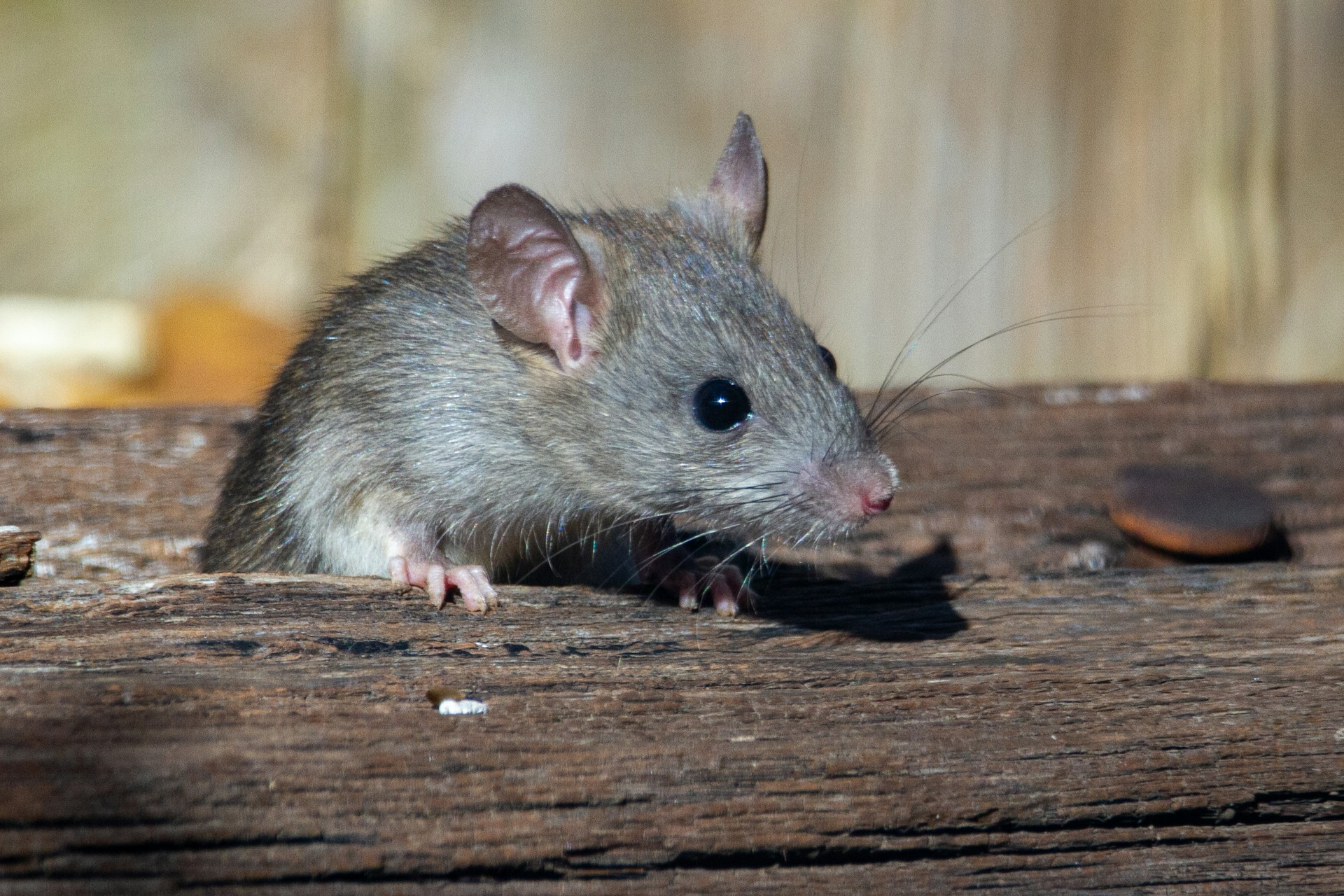
Body size, tail proportions, droppings, burrows, elevation, tracks, and access points help distinguish rats from mice and help determine where monitoring and control tools belong.
Norway rats are heavy-bodied rodents often associated with burrows, foundations, lower levels, sewers, utility spaces, trash, storage, and ground-level food sources.
Roof rats are more agile climbers and may use trees, fences, rooflines, attics, upper storage, overhead utilities, and elevated building openings.
House mice are much smaller and use smaller openings, traps, and travel zones. Dropping size, gnawing, tracks, and nesting locations help avoid applying a rat plan to a mouse infestation.
The CDC recommends using signs such as droppings, gnaw marks, nesting material, tracks, and repeat evidence after safe cleanup to determine whether wild rodents remain active. Review its wild rodent control guidance.
Local rat pressure
Bee Smart does not inspect every property as though it were the same. The first places checked depend on whether the site is a dense multifamily building, a North Metro commercial property, a newer subdivision beside open land, or a home with an attached garage, basement, crawlspace, shed, irrigation edge, or shared utility route.
In denser residential and commercial areas, inspection often starts around alleys, trash enclosures, restaurant or break-room waste, loading areas, shared walls, utility chases, floor drains, and gaps where older structures meet later additions.
Around Brighton, Lochbuie, Dacono, Firestone, and Frederick, Bee Smart also checks the transition between subdivisions and open or agricultural land. Feed, seed, detached garages, sheds, stacked materials, irrigation edges, and outbuildings can support exterior pressure before rats reach the main structure.
In Broomfield, Erie, Lafayette, Louisville, and Superior, common inspection points include attached garages, finished basements, crawlspaces, landscaped drainage areas, construction joints, shared utility penetrations, and roof or soffit routes on properties with mature trees.
Bee Smart is based in Brighton. Share the city, property type, and exact location of the evidence so the inspection starts in the right places.
Request a Local InspectionWhat to expect
The recommendation depends on the species, evidence, active zones, food and water, building layout, burrows, structural openings, children or pets, commercial requirements, and previous products used.
Share where droppings, burrows, gnawing, tracks, sounds, odors, or sightings occur.
The technician evaluates travel paths, nesting sites, food, water, storage, drains, exterior pressure, and structural access.
Bee Smart explains appropriate trapping, secured baiting, sanitation, monitoring, harborage reduction, and exclusion.
Follow-up confirms whether activity is declining and identifies remaining openings, burrows, or resources before the plan is completed.
Large droppings, burrows, or nighttime activity?
Tell Bee Smart where the evidence appears, whether the activity is indoors or outdoors, and which food, storage, utility, customer, or tenant areas are involved.
Cleanup and rodenticide safety
The CDC advises against sweeping or vacuuming dry rodent urine, droppings, or nesting material. Current guidance calls for gloves, thorough wetting with disinfectant, careful removal, and cleaning of contaminated surfaces.
Rodenticides require careful selection, placement, and label compliance. Loose bait or unsecured products can create risks for children, pets, wildlife, and non-target animals. Professional planning helps determine when trapping, secured bait stations, or another control method is appropriate.
Homes and businesses
A burrow beside a residential shed requires a different monitoring and control plan from a restaurant, multifamily property, warehouse, loading dock, food storage area, or commercial trash enclosure.
Home service may focus on kitchens, garages, basements, crawlspaces, attics, yards, drains, sheds, decks, foundations, pet areas, bird seed, trash, and exterior storage.
Business service considers food handling, inventory, waste, receiving, operating hours, tenant coordination, documentation, exterior pressure, maintenance access, and follow-up needs.
Local service area
Bee Smart serves homes and businesses across the North Metro, northern Front Range, and selected communities north and northwest of Denver.
Request rat-control help
Share the property location, the evidence you found, and whether the activity is indoors, outdoors, or both. Bee Smart can use those details to plan the first inspection and explain the next step.
Prefer to talk now? Call 720-937-0527
Related services
Correct identification matters when the evidence involves smaller droppings, insects around contaminated areas, food access, moisture, or structural gaps supporting more than one pest.
Rat control FAQs
Common signs include large droppings, heavy gnawing, rub marks, tracks, burrows, damaged food or building materials, nighttime sounds, nesting material, odors, and repeat sightings.
Rats are larger and generally leave larger droppings, tracks, openings, gnaw marks, and heavier damage. Their travel behavior, trap response, nesting areas, and control placements also differ from mice.
Getting rid of rats takes four steps together: remove the food and water sources supporting them, trap or bait the active population using tamper-resistant placements, monitor until the evidence stops, then seal entry points and correct burrows. Sealing openings first can trap rats inside walls, so exclusion comes after the population drops.
Rats remain where they can reliably reach food, water, shelter, and protected travel routes. Trash, compost, feed, bird seed, pet food, leaks, drains, dense storage, burrows, and structural openings can all contribute.
Exclusion and burrow correction are important, but the timing needs to account for rats already inside or using the route. An inspection can help determine whether the opening is active and how closure fits with trapping, secured baiting, and monitoring.
The CDC advises against sweeping or vacuuming dry rodent urine, droppings, or nesting material because contaminated particles can become airborne. Follow current CDC wet-cleanup guidance.
Odor and sound devices do not replace population control, monitoring, sanitation, harborage reduction, and exclusion. Persistent evidence means the active rats and supporting conditions still need to be addressed.
Traps may reduce rats using a specific route, but lasting control also depends on placement, trap acceptance, food competition, exterior pressure, entry points, burrows, sanitation, and follow-up.
Rodenticides can harm people, pets, wildlife, and non-target animals when misused. Use only EPA-registered products according to the label and keep them secured and inaccessible. Professional service can help determine whether rodenticide is appropriate.
Rat control pricing depends on the property size, how much activity is present, whether the problem is indoors, outdoors, or both, and whether exclusion work is needed. Bee Smart quotes after an inspection so the price reflects the actual conditions. Estimates are free.
Yes. Bee Smart serves residential and commercial properties. The recommendation reflects food handling, waste, inventory, receiving, operating hours, tenants, documentation, exterior pressure, and follow-up needs.
Contact Bee Smart online or call 720-937-0527. Share where you found droppings, burrows, gnawing, tracks, sounds, or sightings and whether the property is residential or commercial.
Ready for a coordinated rat-control plan?
Request an inspection-based recommendation for your North Denver, northern Front Range, or Boulder County home or business.