
Colorado’s diverse climate and terrain make it home to a wide variety of insect life, including several persistent ant species that frequently invade homes, gardens, and commercial properties. While most ants are relatively harmless, some can contaminate food, damage structures, or create discomfort through biting or stinging. Understanding which ant species are most prevalent and the challenges they bring is essential for long-term pest management.
This article explores Colorado’s most common ant species, how they behave, and why customized strategies are necessary for effective control.

Pavement Ants: The Foundation Dwellers
Pavement ants are one of the most frequently encountered ant species in urban and suburban parts of Colorado. These small, brown-black ants nest in cracks of sidewalks, driveways, and building foundations. They are often mistaken for harmless foragers, but their ability to form large colonies close to homes makes them a persistent indoor problem.
- Preferred habitats: Cracks in concrete, stonework, and under slabs
- Activity period: Most active from spring through early fall
- Challenges: These ants forage in trails, especially into kitchens and pantries. Once inside, they are quick to recruit others and can be difficult to eradicate without precise baiting methods.
- Risks: While not dangerous, they contaminate food and surfaces, and their colonies may expand indoors if not promptly addressed.
Their proximity to foundational structures allows them to easily travel between the outdoors and your living space. For families wondering why ants keep reappearing despite cleaning efforts, it helps to understand when and why pests invade, especially during seasonal transitions.
Carpenter Ants: Colorado’s Structural Threat
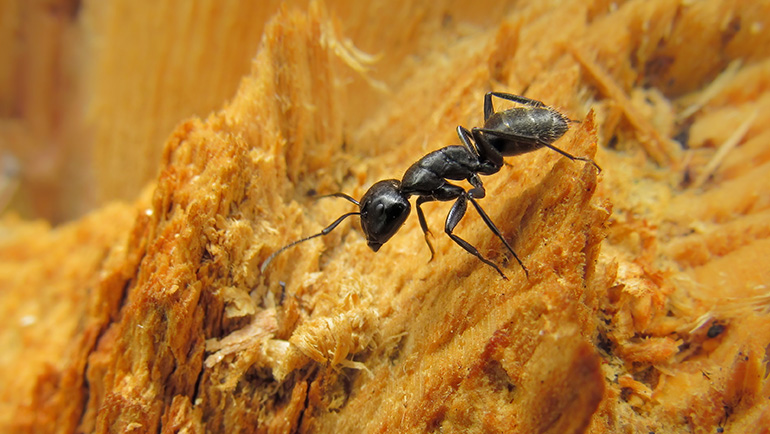
Carpenter ants are among the largest ant species in the region and present a unique structural challenge. Unlike termites, they do not eat wood but hollow it out to create nests, particularly in damp or decaying timber. They are more active in the spring and summer, often following tree lines or utility connections to enter homes.
- Appearance: Black or dark reddish, ranging from ¼ to ½ inch in length
- Nesting habits: Soft or rotting wood inside walls, attics, or crawlspaces
- Damage: Can cause significant structural weakening if colonies go undetected for months or years
- Identification tip: Sightings of large winged ants indoors usually point to carpenter ant swarms
Because these ants are often hidden within walls or insulation, DIY approaches rarely reach the full extent of the colony. Without a professional inspection, their damage may remain invisible until costly repairs are needed.
Field Ants: Backyard Builders
Field ants are common throughout Colorado’s natural landscapes and often make their way into residential yards. They build large mounds and are sometimes confused with fire ants due to their size and aggressive behavior, though they do not sting. These ants usually remain outdoors but may become a nuisance during certain seasons when food is scarce or their nests are disturbed.
- Visible nests: Dome-shaped mounds in lawns, gardens, and near tree bases
- Behavior: Defensive when provoked, can bite when nests are disrupted
- Challenges: Their mounds can damage lawns and garden beds and may attract other pests or predators
Gardeners dealing with recurring field ant activity may benefit from reviewing these pest-proofing tips for outdoor spaces to reduce attractants like rotting fruit, moisture, and unsealed compost bins.
Odorous House Ants: The Persistent Intruders
Odorous house ants get their name from the unpleasant smell they emit when crushed; a scent often compared to rotten coconut. These ants are small but incredibly persistent. They build nests both indoors and outdoors and are highly adaptable to different environments, making them one of the most difficult ant species to control.
- Indoor activity: Often nest near water sources such as sinks, pipes, and under floorboards
- Outdoor nesting: Under rocks, mulch, and within soil close to homes
- Food preference: Sweet substances, including sugar, honey, and fruit
- Problem: Quick to establish satellite colonies, especially after pesticide disruption
Traditional sprays and over-the-counter repellents can scatter the colony, prompting it to split into multiple groups and spread further throughout the structure. Professional identification and baiting strategies are often needed to manage them effectively.
Why Expert Solutions Are Essential
Dealing with ants isn’t simply a matter of spraying visible trails or sealing food containers. Each species requires its own approach, tailored to their nesting behavior, foraging patterns, and colony structure. Without professional training, it is easy to misidentify the type of ant, apply the wrong treatment, or inadvertently cause a colony to relocate rather than resolve the issue.
In Colorado, environmental factors such as altitude, temperature shifts, and soil composition also play a role in how ant species behave from one season to the next. This makes it critical to have a local understanding of pest trends and habitat preferences.
Rather than relying on trial and error, seeking professional assessment can lead to more targeted, efficient, and long-lasting solutions that minimize damage and frustration.
Don’t Let Ants March In
Whether you’ve spotted trails in your pantry or nests forming near your garden, don’t wait for the problem to grow. For accurate identification and effective pest strategies, reach out to Bee Smart Pest Control today.