
Your Brand-New Yard Just Changed the Pest Rules
Closing on a new Colorado home is exciting and a little stressful. Boxes everywhere, new keys, fresh paint, and outside, the landscapers are laying mulch, rolling sod, and adjusting irrigation. At the same time, pests are active and looking for exactly what your new yard now offers: moisture, shade, and shelter close to your house.
On a bare dirt lot, pests spread out and stay low. Once mulch goes down and sprinklers start running, everything changes fast. Ants, spiders, earwigs, and other bugs quickly respond to the new conditions. Many homeowners are surprised to see pests in a brand-new “clean” home, but with new home pest control in Colorado there is a clear pattern you can plan around.
Colorado is home to about 173 different ant species, and several of them adapt especially well to disturbed, newly graded soil around new builds. That local reality is a big reason new construction neighborhoods in North Denver, Brighton, and Boulder County see so much early ant activity.
In this guide, we walk through what usually shows up in the first 2 weeks and what shifts over the next 30 to 90 days as mulch, sod, and irrigation settle in. Our team at Bee Smart Pest Control works across North Denver, Brighton, and Boulder County, so we know how local soils, builder packages, and new construction schedules change pest pressure. This article is part of our “The Hive” education approach, focused on keeping your family, pets, and investment safe without overreacting or overspending.
What Happens in the First 2 Weeks After Landscaping
When construction wraps up and landscaping goes in, the ground around your home gets torn up. Trenches for irrigation, piles of rock, and fresh mulch push insects out of their old hiding spots. Many of those bugs suddenly lose their homes and start searching for new shelter. The easiest nearby option is often the gap under a door, the edge of a garage, or a tiny crack in the foundation.
In these first 2 weeks, we often see:
- Ants showing up along new foundation edges and mulched beds, then scouting inside
- Spiders shifting to gaps around siding, window wells, and new exterior lights
- Earwigs and sow bugs hanging out in damp mulch and slipping indoors at night
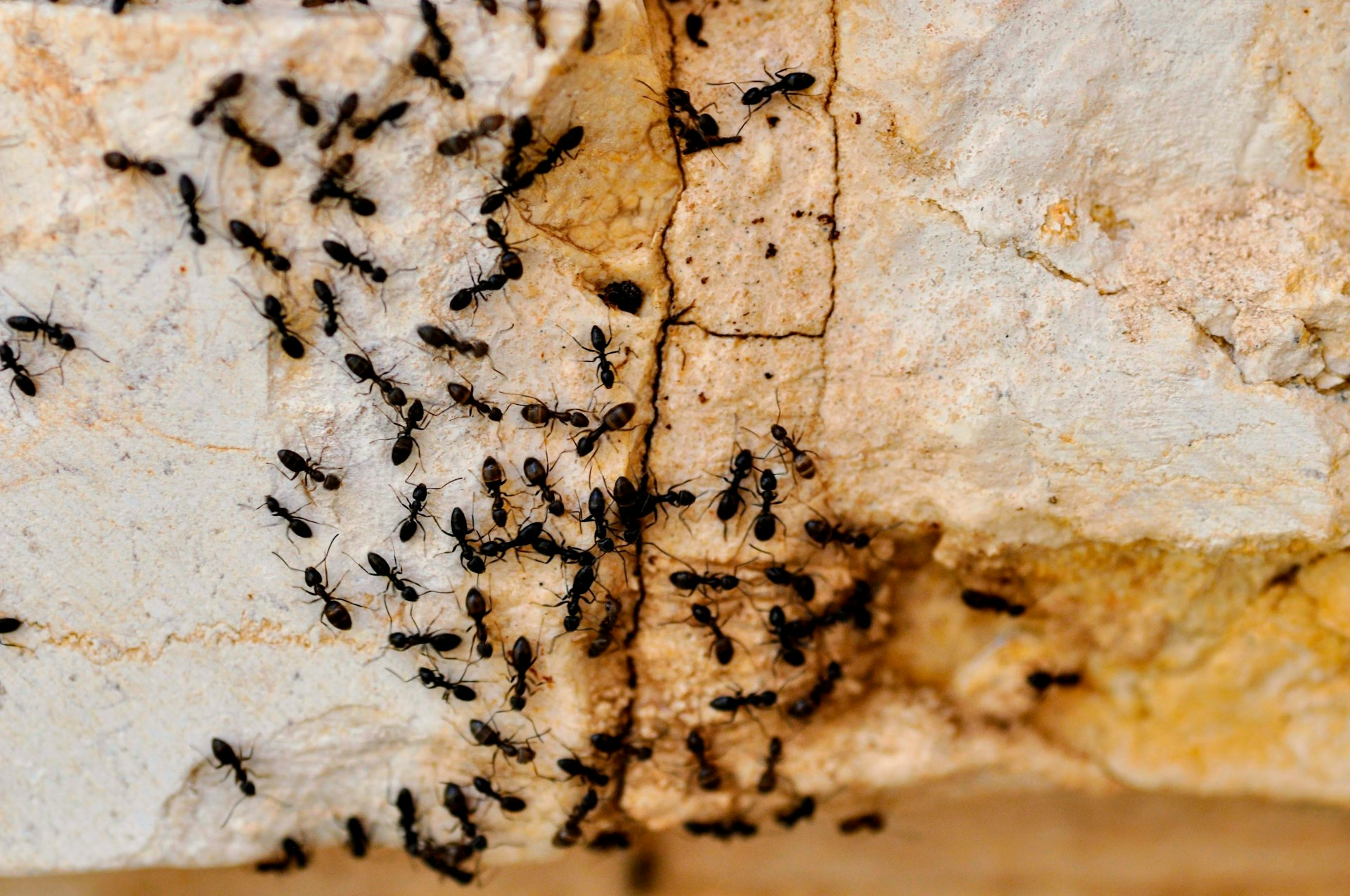
Ants are usually the first visitors. Colorado has many different species, and several love the disturbed soil around new homes. They follow foundation lines, sprinkler edges, and mulch borders. At first, you might notice one or two in the kitchen or basement. Without control, that can turn into small trails.
Spiders are not there to bother you; they are chasing food. New porch and garage lights attract flying insects. Spiders set up around those lights, in window wells, and in siding gaps trying to catch the traffic.
Earwigs and sow bugs (also called pill bugs or roly polies) need moisture. Fresh mulch and new drip lines create damp, dark layers that feel perfect to them. When those areas are right against the house, it is easy for them to slip under thresholds, through weatherstripping, or into the garage.
Seeing this short-term spike is normal. The key is not to panic, but not to ignore it either. Our Basic Plan at Bee Smart focuses on this early phase with:
- Careful treatments along the foundation and common entry points
- Extra attention around mulch borders and rock beds close to the home
- Kid- and pet-friendly products that are safe once dry, helping protect your family’s health
Because our services are set up on a quarterly schedule, the Basic Plan gives you early protection right after move-in and then keeps that barrier in place as your yard matures. That consistent pattern usually means fewer surprise infestations, fewer emergency call-outs, and more predictable costs compared to scattered one-time treatments.
During these first weeks, it really helps if you document what you see. Note where ant trails run, what time of day spiders are most active, and where earwigs are sneaking in. When a technician like Justin Kehoe or Ryan Allen comes by, those details help us build a tight, targeted plan instead of guessing. Because we’re local and relationship-driven, you’ll get to know the same familiar technicians over time, not a different stranger every visit.
The 30-, 90-Day Shift with Mulch, Sod, and Irrigation
After a month or so, your yard starts to settle down. Mulch compacts and holds steady moisture. Sod roots into the soil, so spots that were dusty become thick and damp. Your irrigation schedule becomes more regular, which means water is hitting the same places at the same times. Pests love that kind of predictability.
Here is what often changes during the 30 to 90 day window:
- Ants move from scouting to building more stable colonies near cracks and patios
- Mosquitoes pop up as irrigation overspray and low spots hold water
- Wasps and hornets expand nests around quieter, finished homes
Ant issues shift from random ants to recurring patterns. You might see them in the same kitchen corner, the same bathroom, or along the same deck rail. Landscaping fabric, edging, and patio slabs give them dry ceilings with damp soil under them, which is perfect nesting space.
Mosquitoes become more noticeable once irrigation has run for a few weeks. In Colorado’s warm seasons, even small amounts of standing water can fuel a local surge. Water can collect in:
- Low spots in new sod
- Overwatered strips near sidewalks and driveways
- Window wells and drain areas that trap runoff
Wasps and hornets often take advantage of new decks, fence posts, kids’ play sets, and protected soffits. As heavy construction traffic slows down, nests can grow bigger without being disturbed. Because stings are a real concern for kids, pets, and anyone with allergies, fast response and safe removal matter.
Irrigation settings can make all of this worse if they are not adjusted well. Soggy mulch pressed right against the foundation, constantly wet strips by the curb, or leaky drip lines around shrubs all invite more insect and spider activity.
Our Basic Plus Plan fits this stage nicely. It builds on general pest defense, and adds proactive wasp and hornet focus and seasonal mosquito reduction around patios, porches, and other outdoor spots where your family spends time. With quarterly visits, we can watch how your landscaping matures, shift treatments as needed, and coach you on simple changes to keep that first 90 days from turning into a year-long headache.
Because Basic Plus is a recurring program, you spread your investment out over the year and avoid the higher per-visit cost of multiple one-time calls. Many new homeowners find this approach delivers better comfort and fewer surprises, both for their budget and for their family’s day-to-day routine.
Pest-by-Pest Timeline and Prevention for New Homes
Every pest has its own pattern in a new Colorado neighborhood. Here is what to expect and how to respond.
Ants
Ants are usually the earliest and most persistent issue. With so many species in Colorado, it is common to see scouting workers just days after mulch and sod arrive. Over 30 to 90 days, those scouts can become steady trails inside if they find food and water.
Helpful steps include:
- Sealing small gaps at the foundation and around utility lines
- Keeping mulch 4 to 6 inches away from siding when possible
- Relying on professional barriers instead of heavy DIY sprays, which can sometimes spread colonies instead of solving the problem
Spiders
Spiders show up quickly around new exterior lights and basement windows. They like garages, unfinished basements, and cluttered storage areas. Physical removal, sealing cracks, and exterior perimeter treatments work much better than random indoor spraying.
Mosquitoes
Mosquitoes usually rise 2 to 6 weeks after irrigation starts, especially during Colorado’s warm months. Focus on watering in the morning, trimming irrigation times, and caring for shady shrubs, under-deck zones, and other resting spots. Professional treatments in those areas can bring real relief and can reduce bites for kids and pets playing outside.
Rodents
Rodents become more active as nights cool and fields or open lots around new builds stay messy. In Colorado, that pressure often ramps up in late summer and fall as we move toward winter, and continues through the colder months as mice look for warm, sheltered spaces. Mice often test garage corners, utility entries, and gaps around doors.
Our Rodent Plan is a smart upgrade in neighborhoods near farmland, open space, or creeks. It can include exterior baiting, practical exclusion advice, and seasonal checks before winter to help keep mice outside where they belong. Over time, that steady prevention is usually more effective and more cost-efficient than scrambling to respond to surprise winter rodent problems.
High-Urgency Pests: Bed Bugs, Wasps, and Hornets
On every visit, our approach is education first. We explain what pests are present, what is normal for a new home, and what needs a faster response so you feel informed, not alarmed.
For urgent problems like bed bugs that might hitchhike in during moving or furniture deliveries, fast professional work is important. Bed bugs spread quickly through new furniture, used items, and even shared moving trucks. Bee Smart is set up to respond quickly and thoroughly so you can protect your family’s sleep and health.
The same fast-response mindset applies to wasp and hornet nest removal once neighbors begin spotting nests along shared fences, around mail areas, or near kids’ play zones. Our team is trained to remove nests safely, reduce sting risks, and then fold that information back into your ongoing Basic Plus or Rodent Plan so we can prevent repeat problems where possible.
Smart Habits That Protect Your Investment and Family
Good habits early on can keep pest pressure low without relying only on products. As your new home settles, try to:
- Keep mulch a few inches off the foundation when you can
- Avoid piling lumber, firewood, or moving boxes against exterior walls
- Walk new sod edges and irrigation heads once a month to spot soggy areas
On the outside of your home, door sweeps, screened vents, sealed utility lines, and keeping the garage door closed, especially at dusk, make a big difference. Inside, unpack cardboard quickly, store pantry items in sealed containers, run a dehumidifier in damp basements, and pick up pet food at night. These small steps support your family’s health and comfort while reducing how often we need to rely on products.
Our team lives and works in the same communities we serve, so technicians like Justin and Ryan get to know your property as it matures. They remember where the early ant trails were, how your irrigation changed, and which corners of the garage tend to collect clutter. You are not just getting “a service call”; you are building a relationship with local experts who bring traditional values, showing up on time, explaining what they are doing, and respecting your home.
A quarterly Basic, Basic Plus, or Rodent Plan turns one-time emergencies into a smooth pattern of prevention, with fewer surprises and better comfort for kids and pets. Over the life of your home, that consistent program-based approach usually costs less than reacting to separate infestations, and it offers far more peace of mind, especially for new homeowners still learning the quirks of their property.
Your brand-new Colorado home can stay comfortable, even as mulch, sod, and irrigation reshape the local pest scene. With a clear understanding of the first 2 weeks and the first 30 to 90 days, plus smart habits and steady support from your Bee Smart team, you can turn that new house into a truly pest-smart home.
Protect Your New Colorado Home From Pests Today
If you are settling into a new build or recent purchase, we can help you keep it protected from day one with targeted new home pest control in Colorado. At Bee Smart Pest Control, we design service plans around how you actually live in your home and the specific pest pressures in your area. Reach out today to discuss your home, your concerns, and the best schedule for treatment, or contact us to request your customized quote.