
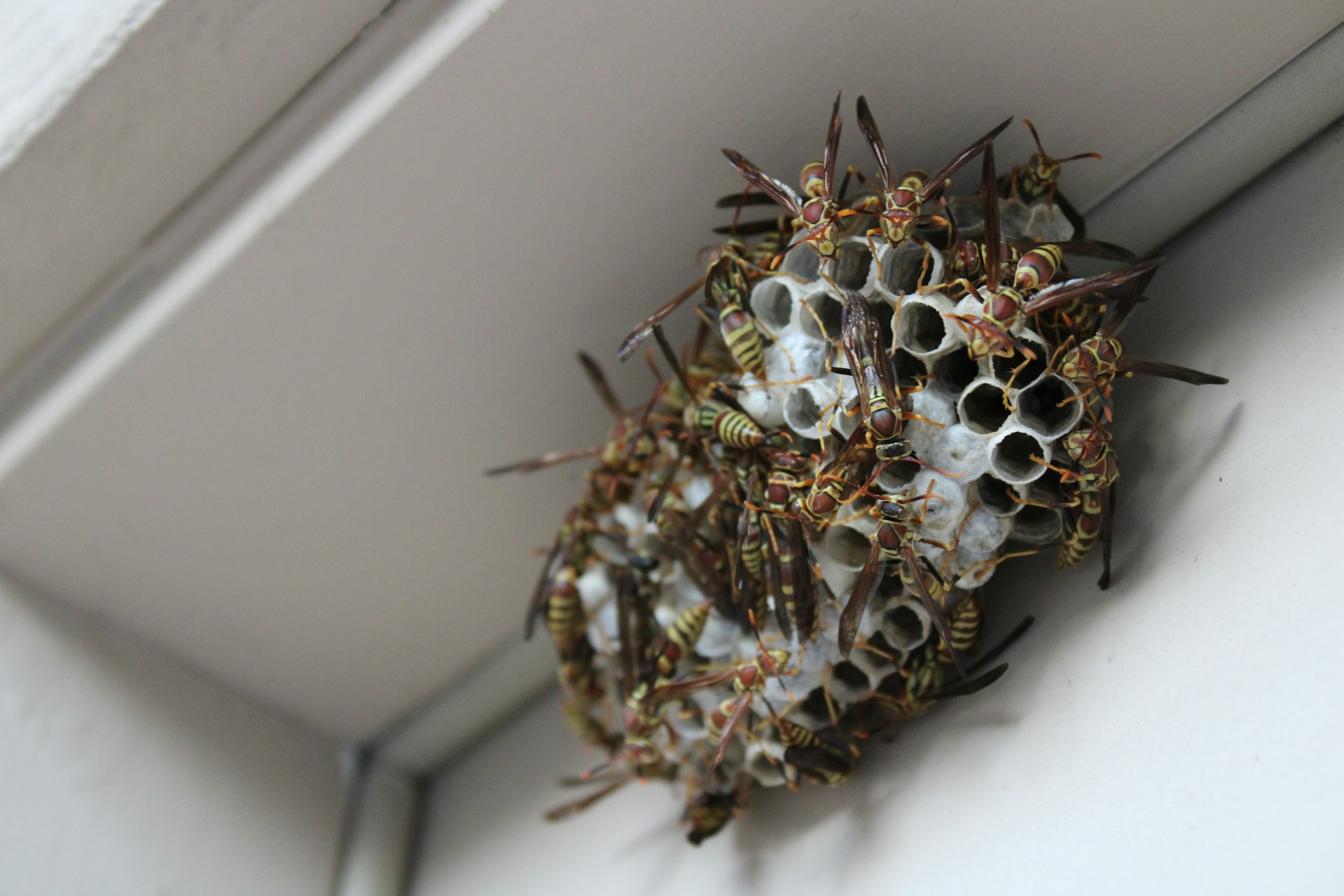
Stop Wasps Before They Own Your New Commerce City Home
New home in Commerce City, fresh sod, new fence, mountain views, and then the first warm week hits and wasps start circling every corner. For many new homeowners, that first spring and summer feels like a surprise. The house is brand new, so why are stinging insects already trying to move in?
New construction neighborhoods are perfect for wasps. The soil is disturbed, there are fewer mature trees to shade things, and there is lots of exposed wood on fences, decks, and playsets. Gaps around siding and utilities have not always been sealed as tightly as they should be, and as the house settles, those spaces can widen. Wasps are quick to test every crack, vent, and eave as they look for a home of their own.
Across the Colorado Front Range, including Commerce City and Brighton, the pattern is pretty steady. In early spring, queens start scouting for nest spots. Late spring is when they really build. By mid- to late summer, activity peaks and stings become more common, especially around doors and patios. In our dry climate, irrigation and outdoor living spaces add extra draw. A simple seasonal checklist, built for Colorado conditions, can keep your new place from turning into a wasp hangout and help protect kids, pets, and your outdoor spaces.
At Bee Smart Pest Control in Brighton, we see this every year in Commerce City neighborhoods. Our local team, including familiar faces like Justin Kehoe and Ryan Allen, uses a quarterly service approach that lines up with the seasons so you are not chasing wasps after they have already settled in. Instead of one-time, reaction-based treatments, our Basic, Basic Plus, and Rodent programs are designed as recurring protection that delivers long-term cost savings and peace of mind.
Spring Landscaping Tweaks That Discourage Wasp Nests
Wasps want quiet, protected spots that stay fairly dry but still sit near food and water. Around Commerce City, that often means areas near flowering plants, drip lines, leaky spigots, and outdoor eating spaces. Even though our climate is dry, sprinklers and irrigation create little wet pockets that pull in both wasps and mosquitoes.
Wasp activity is more than a nuisance. For anyone with sting allergies or asthma, multiple stings can turn into a medical emergency, and stings around doors and play areas are a real concern for families with small children and pets. Reducing nesting spots lowers the risk of painful encounters in your own yard.
A few simple landscape habits each spring can make your yard less attractive to wasps:
- Trim shrubs and trees so branches do not touch your siding, deck railings, or roofline.
- Keep bushes near front doors, walkways, and patios pruned open, not thick and shady.
- Clear out leaf piles and yard debris where moisture and insects collect.
- Move hummingbird feeders and trash bins a bit farther from main doors when you can.
New builds often add a few bonus hiding spots that new homeowners may not realize need attention. Pay extra attention to:
- The underside of new decks, pergolas, and balcony overhangs.
- The corners of privacy fences and gate posts.
- Wooden playsets where crossbeams meet and hardware is hidden.
- Gaps where new concrete patios or porches meet the foundation.
From April through June, a quick look under these structures every week or two can catch tiny paper nests before they grow. Many homeowners find that pairing these landscape checks with a recurring exterior service visit is much easier than trying to remember everything alone. Our recurring Basic and Basic Plus programs include thorough exterior inspections that line up with this spring cleanup, which is far easier and often less expensive over time than dealing with a large nest and emergency visits by late summer.
Seal the Gaps New Builders Leave Behind
Even with a solid builder, brand new homes around Commerce City and Brighton often have small openings that wasps love. Common spots include unfinished caulking, unsealed siding edges, and gaps where cables, gas lines, and AC lines pass through the wall. As the house settles during the first few years, these spaces can open further. These gaps are also an open door for ants, spiders, and later in the year, rodents looking for warmth.
Late spring is a good time to walk the outside of your house with a simple gap checklist:
- Look around doors, windows, garage trim, and light fixtures for cracks wider than a pencil-wide opening. Seal those with exterior-grade caulk or sealant.
- Check weatherstripping on exterior doors and the garage door. If you see daylight, pests can pass through.
- Inspect attic vents, roof returns, and gable vents for torn or loose screens that would let wasps, birds, or rodents inside.
- Peek where utilities enter the home at the foundation line and siding. Foam or proper sealant can close these spots.
- Check around hose bibs, irrigation controls, and AC disconnect boxes, which are common on newly built homes and often left with small gaps.
Safety matters here. If you see a lot of wasp traffic going in and out of a gap, do not try to seal it. That can trap angry wasps and push them inside your walls or even inside the living space, creating a bigger risk for your family and pets. This is when a professional service for wasp removal in Commerce City makes more sense and is much safer.
Sealing these gaps is not just a wasp project. The same entry points are favorites for spiders and for rodents looking for warmth once the weather cools and winter sets in along the Front Range. That is why we often pair our Rodent plan with quarterly pest control: we watch the same vulnerable spots for wasps in spring and summer and for mice and other rodents in fall and winter. Our local techs know the common construction layouts and weak spots in nearby Commerce City neighborhoods and focus on those areas during routine visits, giving new homeowners year-round protection as the house settles.
When to Schedule Professional Inspections and Treatments
Timing is a big part of keeping wasps off your property. A well-planned schedule from early spring through late summer can keep nests from ever getting comfortable and helps avoid surprise stings on busy patios and play areas.
We usually recommend this kind of rhythm for Front Range homes:
- Early Spring, roughly March to April: An inspection-focused visit to look for overwintering queens, last year’s nests, and new gaps from winter weather. This is also a good time to identify potential rodent entry points before the next cold season.
- Late Spring, roughly May to June: Targeted treatments to eaves, soffits, deck undersides, playsets, and fence lines, plus checks for hornets and other stinging insects.
- Mid-to-Late Summer, roughly July to September: Follow-up visits to catch any new nests, refresh protective treatments, and adjust focus to busy areas like patios and kid zones, where families and pets spend the most time.
Quarterly programs such as our Basic and Basic Plus options spread this work out across the year. Instead of paying for surprise emergency calls every time a nest appears, your coverage is steady and predictable. Over the course of a year or two, that often costs less than a series of one-time, emergency visits, and it provides consistent monitoring for related pests like ants and mosquitoes that can surge in Colorado’s warm months.
For homeowners who also want to stay ahead of winter invaders, our Rodent program layers on targeted rodent prevention and monitoring. That means the same local team is watching for wasps in summer and for mice or rats looking for a way into your warm home in fall and winter, giving you comprehensive, program-based protection.
Sometimes you still get an urgent situation, like a nest right over a front door or under a slide where kids play. Our wasp and hornet mitigation is set up for fast response, often same- or next-day, for those high-risk spots. We treat these calls with the urgency they deserve so you can get back to using your outdoor spaces safely.
The same Bee Smart team that handles these wasp problems also responds quickly to other high-urgency issues, including bed bug infestations. Bed bugs require specialized training and fast action, and our technicians are equipped to handle both stinging insects and challenging indoor pests with the same level of care and responsiveness.
Safety-First Removal and When Not to DIY
It is tempting to grab a can of spray and try to handle every wasp yourself. For very small, early paper wasp nests, some homeowners feel comfortable doing that, especially if the nest is high up, easy to see, and away from doors or kids. But there are clear times when DIY turns risky.
Skip the DIY when you see:
- Large, well-developed nests with heavy traffic in and out.
- Bald-faced hornets or very aggressive behavior when you walk nearby.
- Multiple nests near doors, decks, or children’s play areas.
- Anyone in the home with sting allergies or a history of bad reactions.
- Nests in hard-to-reach locations like attics, wall voids, or near electrical and utility lines.
If you do try a small job on your own, keep safety first. Only treat in the evening when activity is lower, and always plan a clear exit route and keep pets and kids indoors. Never plug nest entrances or stuff gaps where wasps are coming and going. That can send them deeper into wall voids or into the attic or living spaces.
Professional removal is usually the safer and smarter option. We use products and equipment that allow accurate, targeted treatments that are more careful around families and pets than random over-the-counter spraying. Local technicians also know the difference between various wasps, hornets, and bees in Colorado and can protect pollinators when possible. For wasp removal in Commerce City and surrounding Front Range communities, the right tools, protective gear, and local experience go a long way toward reducing risk and keeping nests from coming right back.
Make Your New Home a No-Wasp Zone All Season Long
Keeping wasps from taking over your new Commerce City home is less about one big project and more about steady, simple steps. Smart spring landscaping, early gap sealing on your new build, and well-timed inspections from early spring through late summer work together. The payoff is real: fewer stings, safer patios, and less stress every time kids or pets run outside.
For new homeowners, it is easy to underestimate how many small gaps and structural details on a brand-new house can attract pests. Our recurring Basic, Basic Plus, and Rodent programs turn this checklist into an ongoing partnership. Things like inspections, sealing recommendations, and wasp and rodent monitoring become routine, not one more task on your crowded to-do list.
Over time, you get the comfort of seeing the same trusted faces, like Justin Kehoe and Ryan Allen, walking your property and treating it as carefully as their own. As local experts with traditional values, our technicians take the time to explain what they are seeing, why it matters for your family’s health and safety, and how your quarterly plan is preventing bigger problems down the road. That steady, relationship-based care is what keeps new Commerce City homes feeling like your space, not a wasp’s, season after season, year after year.
Protect Your Home With Fast, Professional Wasp Removal
If you are seeing wasp activity around your home or business, now is the time to let Bee Smart Pest Control handle it safely and quickly. Our experts provide thorough wasp removal in Commerce City so you can get back to enjoying your space without worrying about stings. Reach out today to tell us what you are dealing with and we will recommend the right solution. If you are ready to schedule service or ask a question, just contact us.